
Some information about Spektra…
by
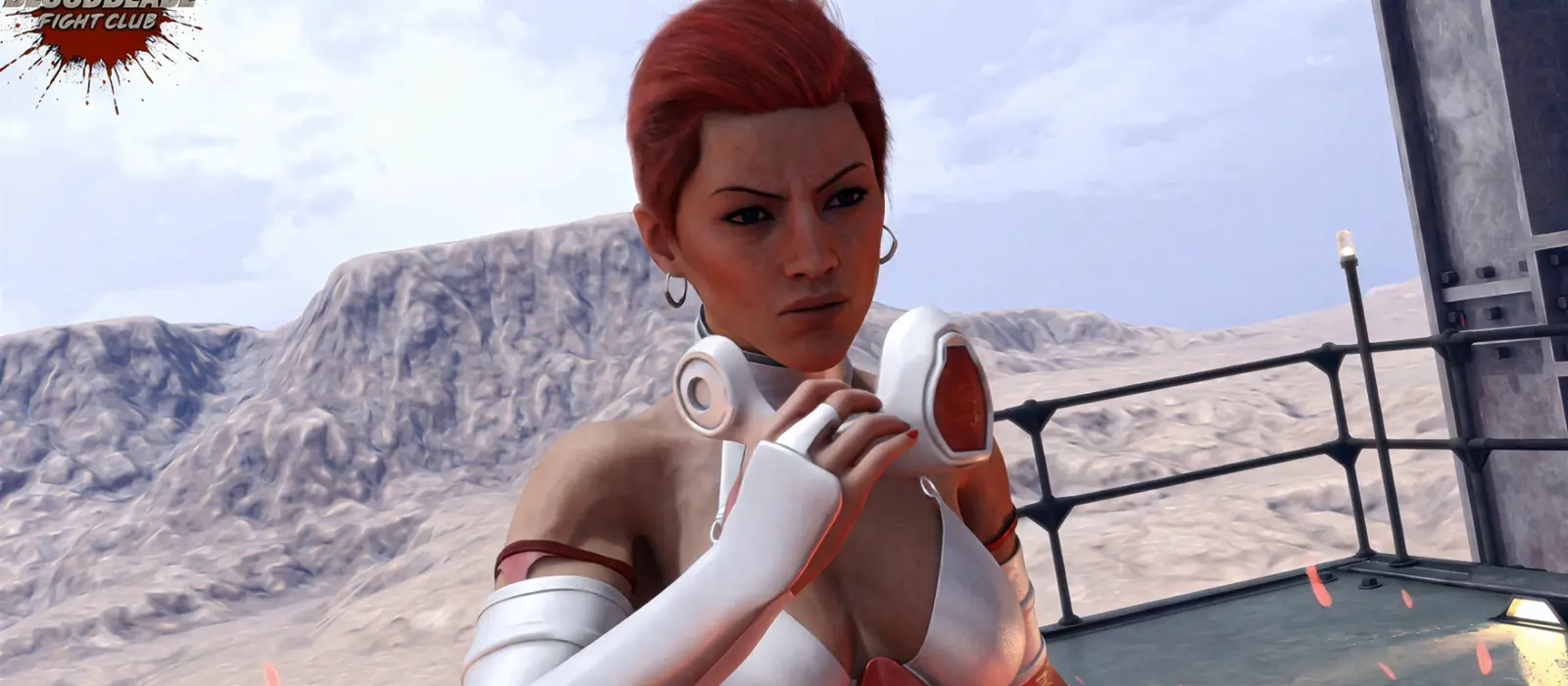
Hey everyone! Some people were interested in the lore aspect of things and the inspiration behind the characters in Bloodblade so I’ve decided to write a bit to explain the character, origins, and psychology of Spektra. Spektra isn’t neatly a protagonist or an antagonist; she is a lawful-neutral aligned character that possesses a complex personality that often oscillates between ruthlessness and empathy. In the books, there are several “breaking points” where the Cabal’s manipulation essentially shape her character, and the intervention of some of the Earth-bound characters- namely Ming Hua- helps her align more fully in the protagonist direction. But this comes after great personal loss with Spektra, and at that crossroads, the story makes you wonder whether she will collapse psychologically and descend into ruin as the Cabal hopes, or whether she will be forged by her trauma to become a person she never thought she could.
Let’s start with the basics. Spektra’s body belongs to an Indonesian-Dutch woman that was abducted by the Astrellan Guardians from Earth. In her Earthly life, she was a practitioner of Pencak Silat and though not a guro, highly proficient in both hand to hand and weapons combat, as is generally normal in many parts of Indonesia. When she was abducted, her body was cloned after optimization in the Guardians Supersoldier Program, a eugenic and cybernetic initiative designed to create capable “biosuits” for superhuman soldiers. The Astrellans are a hominid race; they are rumored to have been Earthlings that pioneered secret dimensional-warp technology; their survivors managed to find Astrella Vektas’ lushly forested but dangerous ecology and after centuries, evolved to possess superhuman intelligence, speed and strength. This was both due to selective pressures and eugenic/cybernetic enhancement. The Astrella Minor system, which Vektas is the heart of, is a life-sustaining solar system with several colonized host planets under a form of feudalism, ruled from the center by a governing body called the Astrellan Republican Council. This is a hyper-religious quasi-f*scist junta that is inspired by the real world regimes of the Italian Social Republic and the Islamic Republic of Iran; they are worshippers of the “Bearer of Water and Wheel” Kuwa’hail’on. Council clergy are schooled in religion and philosophy a la the Platonic philosopher rule, albeit instead of an autocratic singular leader, this is a governing council consisting of clergymen and military officers. Their worldview is Social Darwinist, fanatical, and like most fascist regimes, at one with a constant state of war.
Astrellans are highly conscious of their peoplehood and have a developed collectivist mentality that is a result of environmental danger and scarcity. Taking inspiration from radical feminist works like The Dialectic of Sex, I designed their world as being essentially sexless; the Astrellans have mastered in vitro birth and cloning technology, while having also mastered the ability to generate and preserve consciousness in consoles given to each citizen and controlled by a cloud. This means that as long as there are skinsuits, Astrellans are functionally immortal, provided their placement in the world’s caste system. They speak Yag’drog’ai, a hybrid language that is partly drawn from Earth’s Arabic; a rhythmic, guttural tongue that seems harsh to Earthling listeners. And yet their cybernetic enhancements also allow the quick assessment and AI-augmented downloading of languages around them; ergo they are able to shift into any Earthling language or even alien language depending on the interlocutor. This technology had proven instrumental in Astrellan diplomacy and allowed for the Astrellan Republican Council to also rule over a confederation of alien solar systems. Astrellan Guardianship training is harsh and brutal, bringing to mind Spartan rites. Their fighting force is male and female, with both sexes being roughly equal in strength and agility; the “sexless” world they engineered essentially created androgynous citizens- like Spektra, whose original human body had been modified to develop these genderless features. Without reproduction being the mechanism of species survival, secondary sex characteristics, psychological bifurcations between the genders, and differing socialization are far less pronounced. Instead, Astrellans are raised from childhood by creche-mothers in large government run rearing facilities, separated by caste based on aptitude and skinsuit specialization, and those deemed fit for war are pressed into the armed forces. The cream of the crop are the Guardians like Spektra.
The Guardians are tasked with creating cyborg companions as training companions, navigators, and battlefield assistants. This is what Spektra did with Stalker- designing his body, programming his mind, and tethering him with pure loyalty to her. A companion cannot strike against his keeper, and the bond between the Guardian and their companion is tender beyond friendship. Spektra programmed Stalker as a child (Astrellan “children” being adult clones suspended in an immature state until they are trained by caste standards) and he had accompanied her in battle and other aspects of life since. Guardian training emphasizes the transmogrification of emotion into aggression. Like the fascist regimes’ youth programs of the 1930s, the Astrellan Guardians training program subjects its ranks to extreme deprivation, brutality, abuse and combat from a young age, creating a psychological split in them- highly obedient with the ability to turn on and off their empathy, singularly focused on their collective goal. Yet this isn’t to say that the human part of them is gone. This is evident with Spektra, who is distraught in the first two books over the loss of her lover Ry’el (since their world is non-reproductive, relationships are primarily emotional, and same-sex relationships are common). Ry’el was a squadmate of Spektra’s in her cadet years where she first experienced combat during the Rift War. This war was a horrific civil war in Southern Vektas that erupted when wayward councilmen and clerical backers declared independence over vital minerals and cloud databases, prompting a heavy-handed response from the central government which sent the Guardians to quell the uprising. Ry’el and Spektra developed a forbidden love for one another, sustaining their humanity in a state of war and oppression, and Ry’el was eventually felled in battle. This was a wound Spektra never quite got over.
And yet consistent with Spektra’s tendency to develop attachments in periods of extreme stress- like the Rift War- she eventually develops tender feelings for Ming Hua. Ming Hua initially takes note of Spektra- intrigued by her human-yet-otherworldly features and presence. As the stresses of the Cabal’s island bear down on the protagonists, these bonds deepen. Ming Hua has a moment where she realizes she has feelings for Spektra after Spektra, demoralized by the loss of Stalker, asks Deringer to kill her in a fight (she had lost the will to fight from the impact of her grief). Seeing Spektra wounded on the gurney and struggling to stay alive, Ming Hua develops a sense of investment in her and though she doesn’t admit it to herself, this eventually blooms into a hidden affair in the third book.
How did Spektra psychologically develop? In Carnage, she and Stalker are singularly focused on killing combatants in the tournament and uploading their consciousnesses to the cloud apparatus. These would then be taken back to Vektas and programmed into extant skinsuits to create more supersoldiers. It’s important to note that at this point, after years of civil war, the Astrellan Republic is beleaguered and limping along when the Voidbringers, an alien race with entropic powers, decides to declare war on them and invade their planetary system. The Astrellans are clearly losing this war, with high level defections and betrayals in the government, while hardliners in the Guardians remain singularly focused on resistance. By porting Spektra and Stalker back to Earth, they seek to upload the uncanny abilities of the more “otherworldly” fighters, optimizing them, and adding them to their ranks in their planet’s desperate last stand. And yet it’s precisely this “theft” that the Cabal notices. When Spektra kills Slither and takes his consciousness, the Cabal, seeking to appease the incensed Emperor Virian who was humiliated by his warrior’s loss, seeks to re-animate the beast and bring him back into the tournament. It’s then that they realize the tether to his soul is gone, and they find out that both Spektra and Stalker are stealing the consciousnesses of these warriors. This obviously throws a wrench in the Cabals’ tournament plans, so the High Priest commits to destroying Spektra- psychologically, then physically for the patrons. A key change mechanism in Spektra’s personality was the Cabal engineering both her and Stalker’s losses in the brackets, and arranging them to fight one another in Redemption. This faces Spektra with a brutal dilemma. Stalker cannot harm her. It goes against his programming. And yet failure to fight and kill in Redemption results in suicide. Likewise, if Spektra were to take her own life, Stalker would cease to function- he cannot continue their mission, only Spektra can. Spektra is forced to kill her lifelong companion and only friend, spiralling her into a psychological breakdown. It was the High Priests’ hope that this either makes her more destructive and corrupt, or totally mentally defeated and ripe for death. Ming Hua intelligently recognizes this is the time to recruit her into the circle of protagonists, and with Rukhsana’s blessing, begins to work on her.
What ensues in Ruin is that Spektra becomes part of the protagonists, a psychological palingenesis of sorts. Instead of breaking, she comes back psychologically stronger with the help of Ming’s love. She grows less cynical about Earthlings and sees parallels with them and her own kind. This psychological strengthening is symbolically capstoned by her physical strengthening when she disrupts the island’s power generator to re-power her depleted pulse abilities (the Cabal had specifically diminished both her and Stalker’s pulse abilities, rendering them half-strength so they can lose in battle). By electrocuting herself, she comes back six times stronger and is able to save Tamora’s life in their match against the Cabal’s brutal demons- Spektra single-handedly kills three of these beasts in a spectacular fashion that quickly resonates with the audience of patrons, and perturbs the High Priest. As events proceed into Ascension, Spektra plays a deeper role in the destruction of the island, and Ming promises to return her consciousness to her dropship, and they vow to meet each other again. It is hard to understate how deeply these two characters grow to love one another; what starts as a trauma-bond evolves into something far more meaningful and sustaining for both of them.
Spektra functionally is armed with pulse abilities; these are part of her bodysuit, her mainframe (circuitry in her brain and limbs) and her gauntlet. This is why in fight animations her eyes glow a beaming red. Her signature pulse moves often consist of six or more pulse beams arranging themselves in a spinning circle above or behind her, and shooting out like projectiles against enemies, or pushing her body into flight. Spektra is also armed with a pulseblade (Stalker has two), which sears red with pulse and slices through enemies in battle. She also possesses a combat dagger fastened to her thigh. She wears a ventilator mask and earphones like most hominid Guardians and has no extensive cybernetic enhancements like Stalker does (his arm and chestpieces for instance). Spektra can port in and out of battle using gas plumes and pulse beams. She is tall for a female character and lean, and though her body possesses a feminine frame, her face is not traditionally attractive, with more masculine features. She prefers to keep her hair cropped short and like all Astrellans, colors her hair to match her pulse energy.
I hope this write-up helped answer some questions for you fans about this intriguing character! She is definitely one of my favorites, psychologically.